4 Nov 2026
Decoding Interconnections Between Data Streams and Community Pathways in Wellness Systems

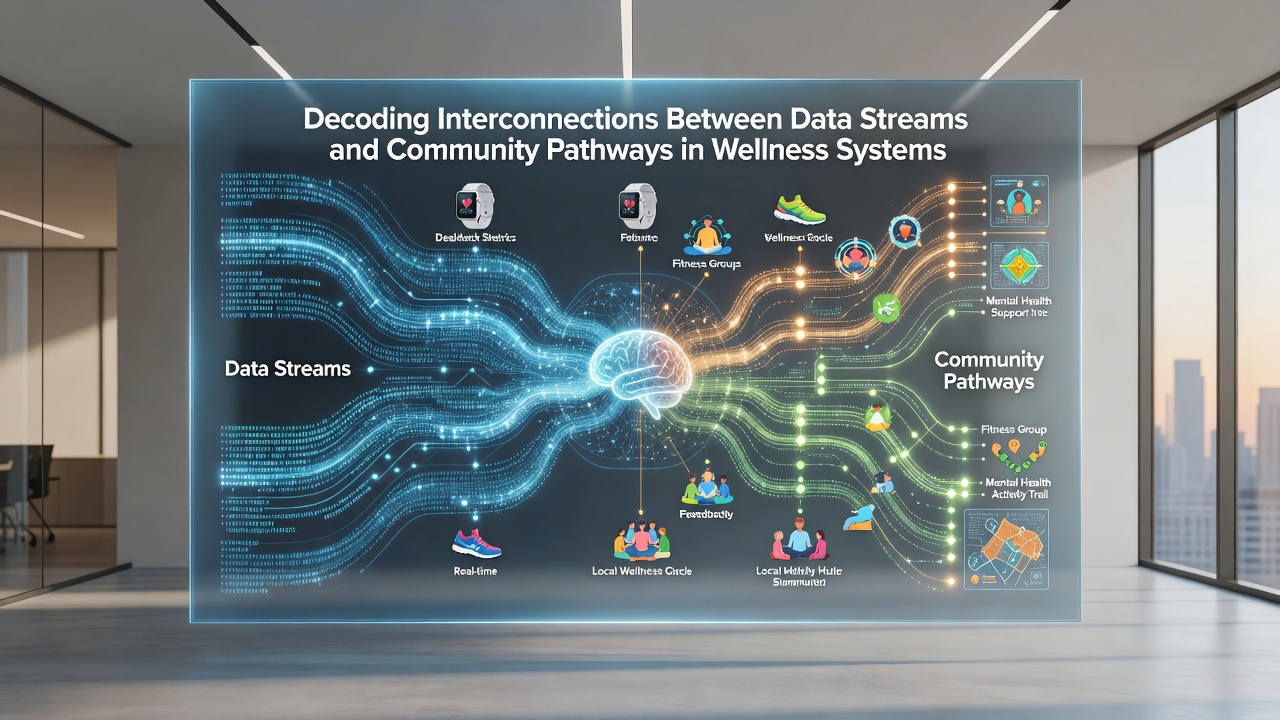
Wellness systems today rely on multiple layers of information that move through digital channels and local networks alike, and observers note how these elements create measurable outcomes when aligned properly. Data streams from wearable devices, electronic health records, and public health monitoring tools feed directly into broader frameworks that communities use to guide participation in physical activity programs, nutrition initiatives, and mental health support structures.
Core Components of Data Streams in Wellness Contexts
Health organizations track continuous inputs from sensors and surveys that capture heart rate variability, sleep patterns, and activity levels across populations, and these inputs undergo aggregation before distribution to regional coordinators. Government agencies in the United States through the Centers for Disease Control and Prevention publish annual summaries that detail how aggregated fitness metrics correlate with participation rates in community exercise classes. Researchers at institutions in Canada have documented similar patterns where municipal wellness coordinators adjust program schedules based on real-time uploads from resident tracking applications.
Mapping Community Pathways and Their Structures
Community pathways consist of organized routes that residents follow to access group-based wellness resources such as walking clubs, shared garden projects, and peer-led education sessions, and these routes often incorporate feedback loops from local health departments. Data collected at entry points like community centers reveals attendance trends that shift according to seasonal changes and transportation availability, while coordinators in European Union member states compile quarterly reports on how such pathways influence long-term adherence rates. What's interesting is the way geographic information systems overlay participant origins onto service locations to highlight gaps in coverage.
Examining the Interconnections at Work
Interconnections emerge when raw data streams undergo processing that identifies clusters of need within specific neighborhoods, allowing pathway designers to reroute resources accordingly. For instance, elevated stress indicators from app-based check-ins can trigger automated alerts that prompt community organizations to increase availability of mindfulness workshops in those zones. Australian Institute of Health and Welfare reports from recent years demonstrate that regions integrating these data flows see higher engagement numbers compared with areas that operate programs in isolation. And the process continues as outcome measurements from pathway activities loop back into the original data repositories for refinement of predictive models.
Analysts examine how privacy protocols govern the transfer of individual records into anonymized datasets used for pathway optimization, and compliance frameworks established by health ministries in multiple countries require explicit consent mechanisms at each stage. Studies published in academic journals highlight cases where seamless data exchange reduced duplication of services by linking hospital discharge information directly to follow-up community rehabilitation groups.
Developments Projected for November 2026
By November 2026 health authorities expect expanded deployment of standardized application programming interfaces that will allow wellness platforms to share de-identified activity metrics with municipal planning departments in near real time. Pilot projects already underway in several mid-sized cities test automated matching between individual progress data and available community slots, and preliminary figures reveal modest increases in sustained participation when these matches occur promptly. Observers point to the role of cross-border data standards emerging from collaborative efforts among North American and Asia-Pacific health agencies that aim to reduce format incompatibilities.
Practical Implementation Examples
One documented case involves a midwestern county that connected hospital readmission statistics to local walking group registrations, resulting in targeted outreach that increased attendance among recently discharged cardiac patients. Another instance from a Scandinavian municipality shows how aggregated mobility data informed the placement of new outdoor fitness stations along existing community routes, and subsequent measurements indicated broader usage across age groups. These examples illustrate the operational steps required to translate stream analysis into pathway adjustments without relying on manual interpretation at every step.
Technical and Organizational Considerations
Integration demands compatible data formats and secure transmission methods, while organizations must maintain audit trails that satisfy regulatory requirements across jurisdictions. Training for pathway facilitators now frequently includes modules on interpreting dashboard outputs derived from incoming streams, and professional associations offer certification programs focused on this intersection. Data quality checks occur at multiple points to prevent propagation of errors that could misdirect community resources away from high-need areas.
Conclusion
The linkages between data streams and community pathways continue to evolve through iterative refinements driven by empirical measurements collected across diverse settings. Health systems that maintain consistent exchange protocols between digital inputs and localized programs demonstrate measurable alignment with participation objectives, and ongoing standardization efforts position these interconnections for wider application in coming cycles. Continued documentation of outcomes will supply the evidence base for further adjustments to both data handling procedures and pathway designs.