21 Oct 2026
Charting the Progression of Guideline Structures in Wellness Initiatives and Their Impact on Participant Engagement
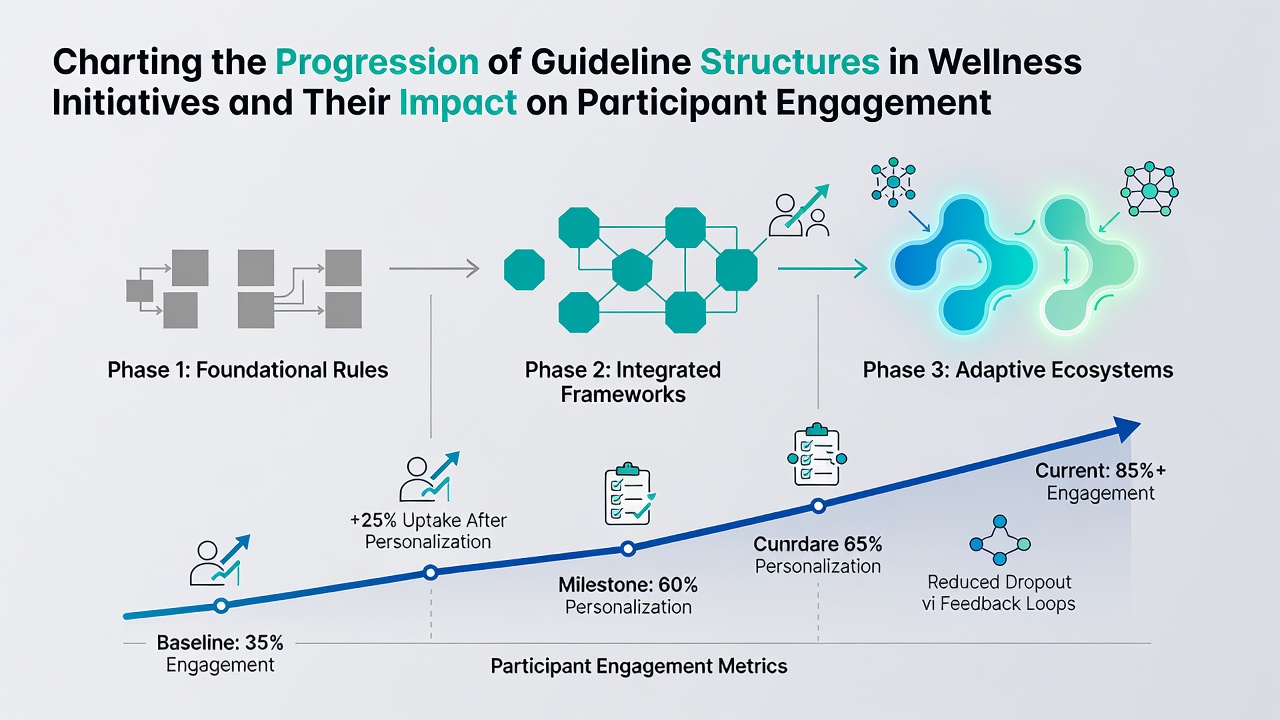
Wellness initiatives have long relied on structured guidelines to shape participant involvement, and observers note steady shifts in how these frameworks get designed and applied over time. Data from public health records show early programs in the late 20th century often used rigid step-by-step protocols that focused on measurable targets such as daily activity quotas and dietary benchmarks, whereas later iterations incorporated feedback loops and adaptive targets based on individual progress reports.
Researchers at institutions tracking corporate and community programs found that initial guideline structures emphasized compliance through checklists and mandatory reporting, yet engagement levels tended to plateau after initial rollout periods because participants encountered limited room for personalization. Studies compiled by the National Institutes of Health indicate that when guidelines remained inflexible, dropout rates climbed within six months, prompting administrators to experiment with modular approaches that allowed participants to select focus areas aligned with personal priorities.
Early Structures and Their Reach
During the 1990s and early 2000s, wellness guidelines frequently centered on standardized metrics issued by large employers and government agencies, and these documents outlined weekly exercise minutes alongside nutrition thresholds that applied uniformly across groups. Participation data collected by the Centers for Disease Control and Prevention revealed consistent enrollment spikes at launch events, but sustained involvement required supplementary incentives such as progress badges or group challenges. Those who studied these programs observed that rigid timelines sometimes created pressure points, especially for individuals managing variable schedules or health conditions, so program designers began testing tiered options that adjusted expectations based on baseline assessments.
Shifts Toward Flexibility in the 2010s
By the middle of the following decade, guideline structures started incorporating digital tracking tools and self-reported data streams, which allowed for real-time adjustments rather than fixed quarterly reviews. Evidence from longitudinal workplace studies shows that when participants gained access to customizable dashboards, average engagement durations extended by several months compared with earlier static models. Organizations in Europe and Australia piloted hybrid frameworks that combined core requirements with elective modules, and figures from those trials suggest higher retention when people could prioritize mental health components or social connectivity elements alongside physical targets.
Recent Developments Leading Into 2026
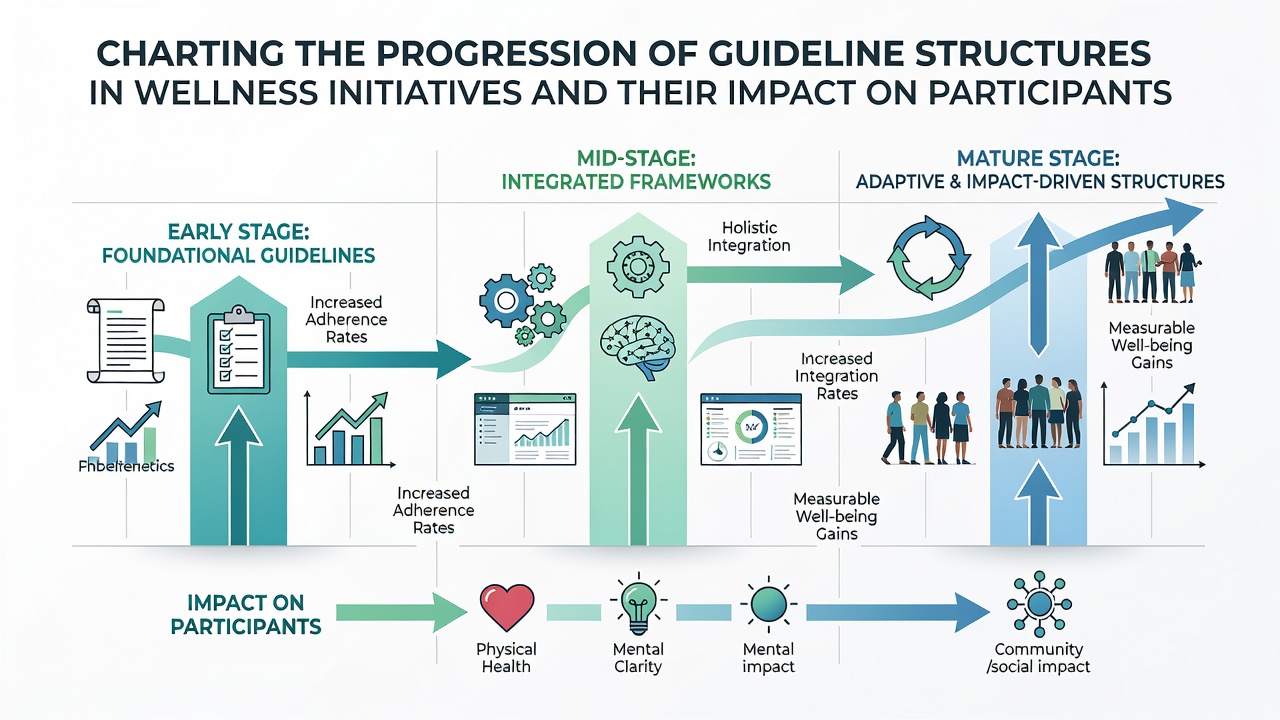
Current guideline revisions emphasize integration with broader lifestyle data, and administrators now reference aggregated anonymized inputs from wearables alongside periodic surveys to refine recommendations. In October 2026, several regional health authorities plan coordinated releases of updated frameworks that introduce phased rollout options, allowing communities to test simplified versions before full adoption. Academic analyses of pilot sites indicate these phased structures correlate with steadier participation curves, particularly when guidelines include built-in review points every eight weeks. Observers tracking engagement metrics note that programs incorporating seasonal adjustments, such as modified outdoor activity targets during colder months, maintain involvement levels more consistently across diverse demographics.
Industry reports from research consortia highlight that guideline structures now often embed behavioral science principles, including prompt-based reminders and social norm messaging, which data suggest can lift weekly check-in rates by noticeable margins. When frameworks allow participants to set micro-goals within larger categories, completion rates rise because the structure accommodates fluctuating motivation without triggering complete withdrawal. Public health agencies across North America and Asia have documented similar patterns in community-wide initiatives, where flexible scaffolding around nutrition education or stress management produces broader uptake than uniform mandates.
Measuring Engagement Outcomes
Quantitative reviews of wellness programs reveal correlations between guideline adaptability and metrics such as session attendance and self-reported satisfaction scores, although causation remains under ongoing examination by multiple research teams. Case examples from large-scale employer initiatives show that when structures evolve to include peer support pathways alongside individual targets, sustained participation extends beyond the first year at higher rates. Those monitoring outcomes also track equity factors, noting that guidelines incorporating accessibility considerations, such as alternative activity substitutions for mobility-limited individuals, reduce disparities in engagement across population segments.
Conclusion
The progression of guideline structures in wellness initiatives reflects ongoing refinement based on accumulated participation data, and patterns emerging through 2026 continue to favor adaptable models that respond to individual and group feedback. Organizations maintaining these frameworks continue to evaluate how structural choices influence retention and depth of involvement, drawing on evidence collected across varied settings to inform subsequent updates.